Stanford University
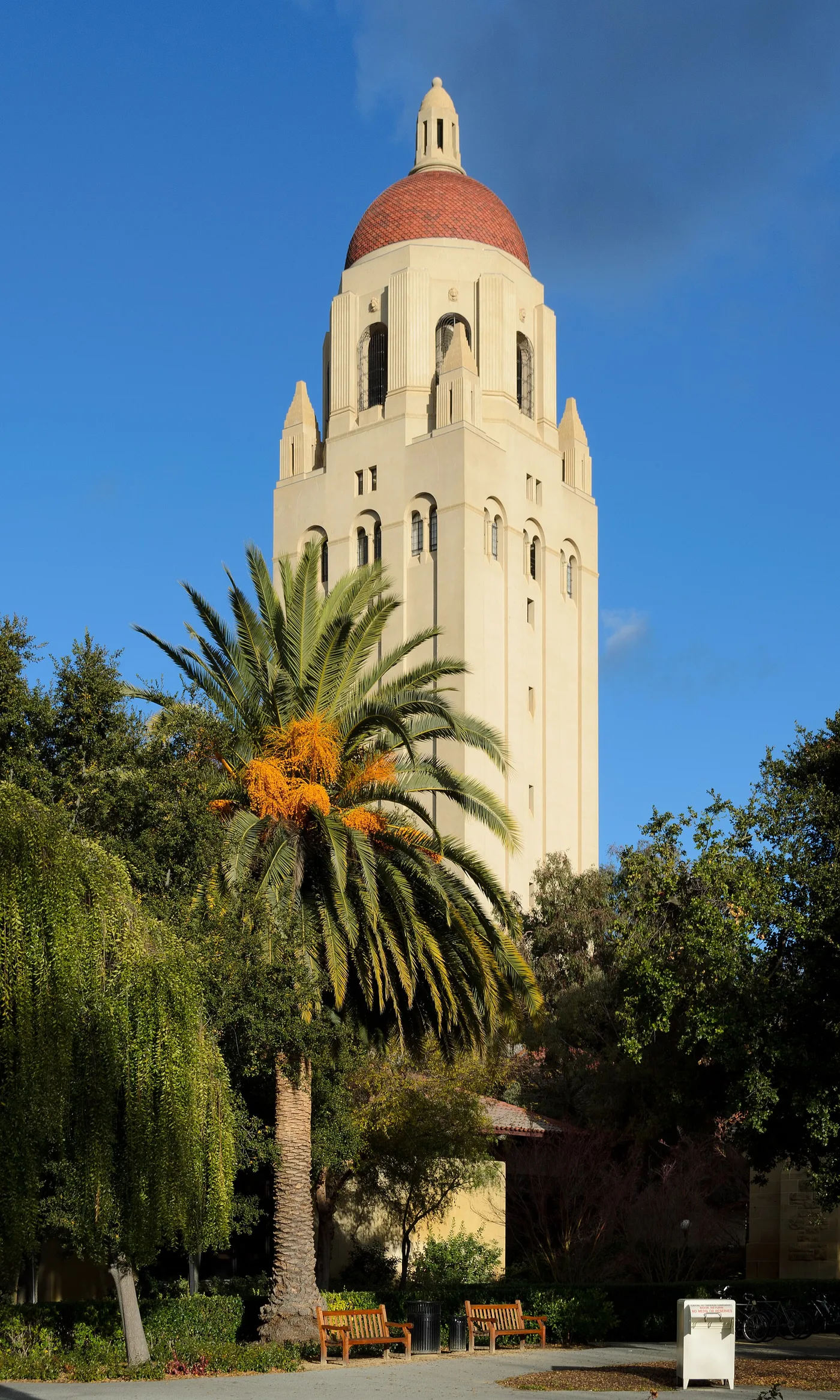
The western anchor. The campus, Memorial Church, and Hoover Tower are open to public visitors.
The address that started Silicon Valley. A market that rewards preparation and punishes the opposite.
Palo Alto is the oldest of the Silicon Valley cities by both founding and cultural reputation, and Stanford University sits at its western edge as the literal birthplace of the tech industry. The city pattern is distinctive: tree-canopied residential streets organized around University Avenue downtown, the California Avenue secondary district, and the Stanford Shopping Center as the high-end retail anchor.
Architecturally the city runs the full California pattern. Craftsman bungalows in Professorville and the Crescent Park district, mid-century Eichlers in Greer Park and Royal Manor, Spanish revivals scattered through the older streets, and increasingly modern infill where lots have been scraped and rebuilt. The Stanford Avenue corridor and the streets immediately around University retain the most historic character.
Geographically Palo Alto stretches from the bay-front Baylands Preserve in the east to the foothills above Stanford in the west, with Highway 101 running through the bay-flat eastern district and 280 along the western foothills. The two halves of the city behave like different markets in many respects.
The western anchor. The campus, Memorial Church, and Hoover Tower are open to public visitors.
Luxury open-air mall just east of the campus, the high-end retail anchor of the central Peninsula.
Downtown's main pedestrian and dining corridor, anchored by the Stanford Theatre and a row of independent restaurants.
The smaller secondary downtown south of Oregon Expressway, with a regular farmers market and locally-owned restaurants.
Nearly 2,000 acres of preserved tidal marsh on the city's eastern edge, with a long Bay Trail segment.
The city-owned 1,400-acre open space at the western foothills, opened to the wider public after a 2022 vote.
Palo Alto is one of the two or three markets in the Bay Area where the buyer's expectation of presentation quality is highest. Listings that show staging-level finishes, restored period detail where appropriate, and disclosure packages organized to a fault consistently outperform comparable homes by margins that make the prep work obviously worth it.
The biggest pricing trap here is land-value misalignment. A home on a 7,500-square-foot lot in Crescent Park is fundamentally not the same asset as a home on a 6,500-square-foot lot in Old Palo Alto, even when the structures are similar. Buyers are sophisticated about land value; pricing strategies need to start from the lot and work up.
The buyer pool is patient and decisive. They wait for the right home, then move quickly when it appears. Listings that linger are punished severely; listings that launch ready to perform routinely see multi-offer within the first ten to fourteen days.
I represent buyers and sellers in Palo Alto regularly. Thirty minutes on the phone, no obligation, and a real read on your specific situation.